Fixing Overloaded Power Points, Fast
An overloaded power point is drawing more than the outlet and its circuit were sized to deliver, usually because a power board or a chain of adaptors is feeding off the one socket.
The warning signs are easy to miss until they aren't: plugs that sit warm, a faint buzz from the wall, or a board that keeps cutting out.
Spotted a socket running warm, or one that trips the moment the kettle and heater go on together? Call (02) 9073 7836 and we'll work out what it genuinely needs.
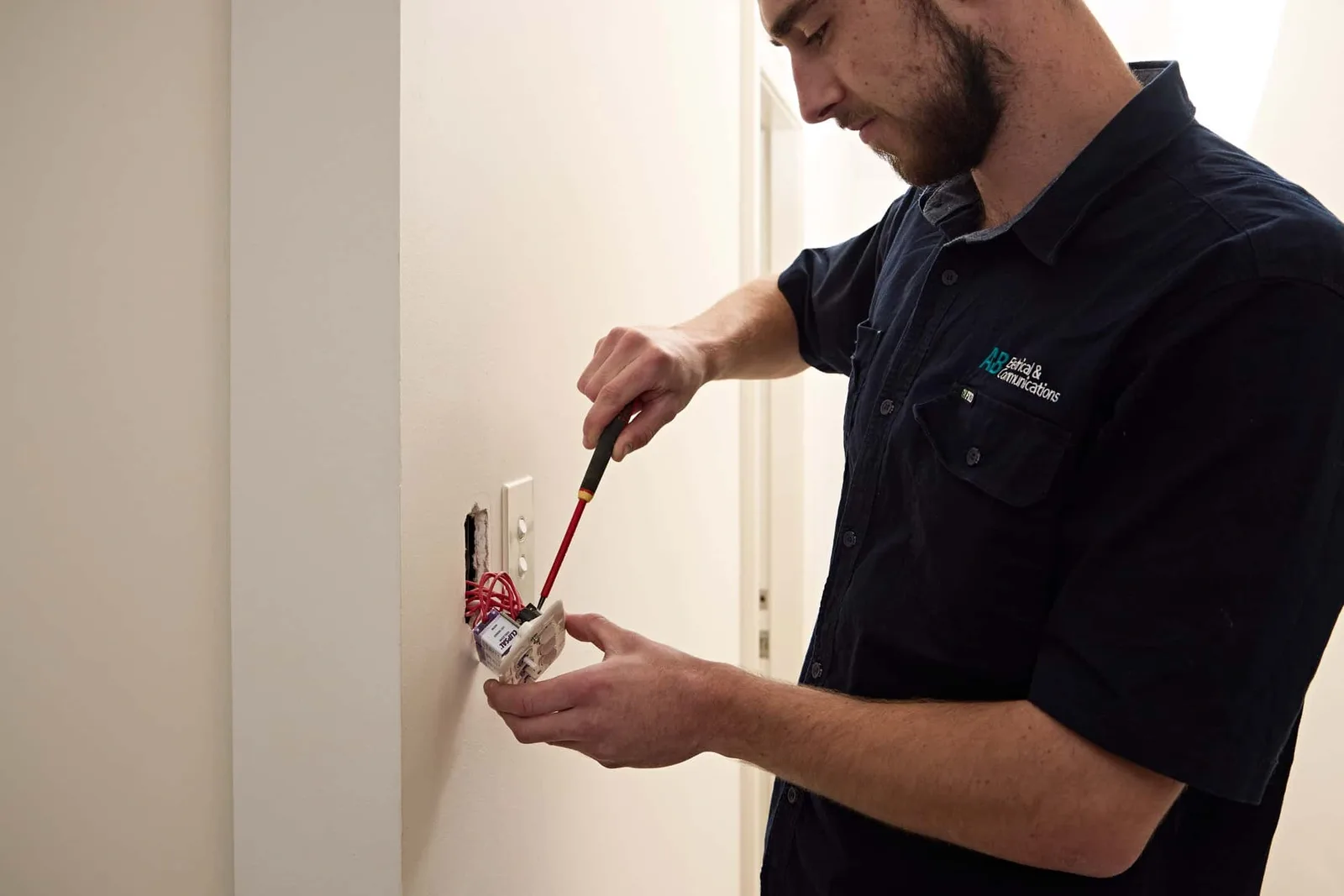
Why Your Power Points Are Overloaded
An outlet has a current rating, and everything plugged into it, directly or through a board, draws against that single limit.
Go over that limit and the connection warms up. Today's households run far more off a single socket than the old terrace wiring was ever laid out for, and the trouble begins right where demand overtakes what the circuit can give.
It usually shows up in one of two ways. Either a protective device keeps interrupting the circuit, or nothing trips and the outlet quietly runs hot instead, which is the more dangerous of the two.
The real issue is rarely the appliances themselves. It's that too much is being funnelled through one outlet that was only ever meant to feed one or two things.
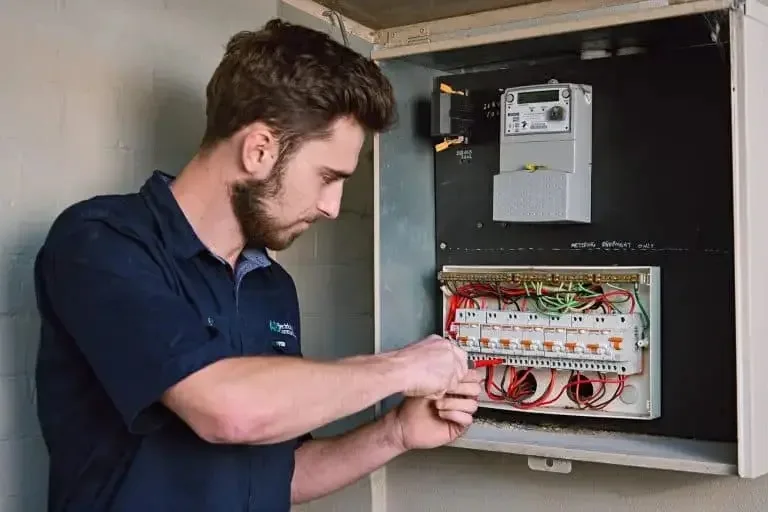
Should You Worry, or Can It Wait?
When a breaker cuts out under a heavy load, that is protection working as designed. Annoying, yes, but not a fault to panic over.
A different picture emerges when a point runs warm or hot, when a plug is discoloured, or when you smell hot plastic near an outlet. Warning signs like those mean stop loading that point now.
Sparking as you plug something in, or a board that feels hot to the hand, both belong in the same urgent group and shouldn't be left running.
Until it's been checked, unplug the heavy items from that point and treat any adaptor as a stopgap rather than a permanent answer.
A hot outlet or a smell of burning: switch that circuit off and phone (02) 9073 7836 before using it again.
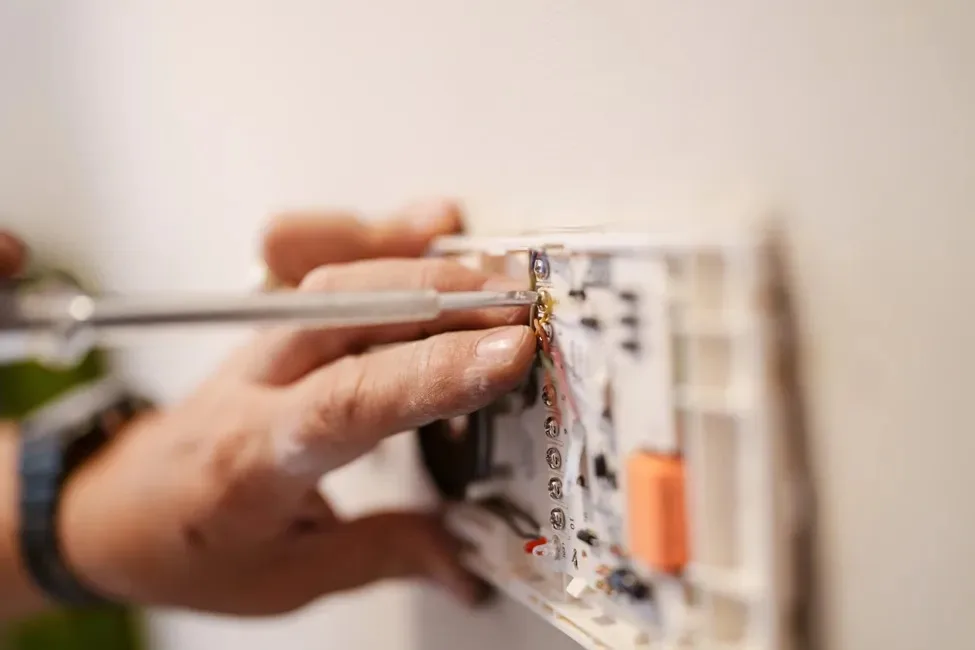
Common Causes of Overloaded Power Points
Overloading almost always traces to demand outrunning what a single outlet and its circuit can supply. These are the setups we see behind it most often.
- Double adaptors and power boards stacked up. Several high-draw items sharing one outlet through a single adaptor.
- Too few outlets for the room. An old layout that leaves people daisy-chaining boards to reach everything.
- Heaters and appliances on the wrong circuit. High-wattage gear sharing a circuit with plenty else.
- A single circuit feeding too much. Common where a home has never had extra circuits added.
- Adaptors stacked on adaptors. One plugged into the next, well past any point's safe rating.
- Undersized old wiring. A circuit put in for a much lighter era of appliances.
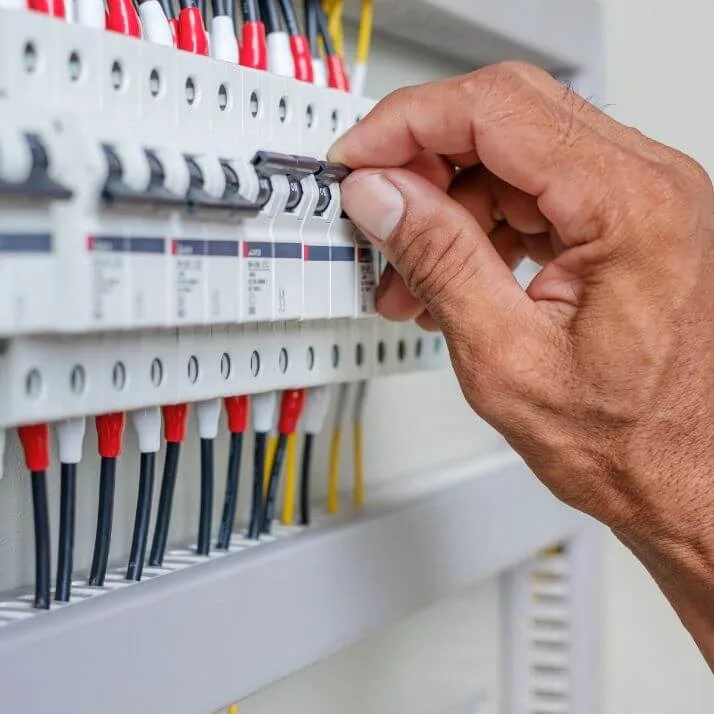
Do This First, Before We Arrive
- Ease the load off that point. Unplug the heaviest items, especially anything that heats, and spread them to other rooms for now.
- Break up any adaptor chains. Where one adaptor feeds another, unplug it back to a single point first.
- Leave the wiring to us. Fitting new outlets or a fresh circuit is licensed work in NSW, not a weekend project.
How We Fix and Certify Overloaded Points
We look at the whole picture first: how many things run off that outlet, what they draw, and what the circuit behind it can actually carry.
We'll also check the outlet itself for heat damage, because a point that's been overloaded for a while often needs replacing, not just relieving.
Sometimes the fix is giving a hungry appliance its own run back to the board, so it no longer fights the rest of the room for power. Just as often it's adding outlets in the spots where a board keeps appearing.
Where the board itself is the bottleneck, we'll flag that too, since no amount of new points helps if the circuits feeding them are already maxed out. We'll walk you through the options, from the quick fix to the proper long-term one, and let you choose with the trade-offs in front of you.
The work is done to AS/NZS 3000, and we hand over a compliance certificate on any notifiable job, along with a written quote agreed before a tool comes out.
How to Take the Strain Off Your Outlets
A few changes end the reliance on adaptors for good and take the heat off your wiring. These are the ones worth doing.
- Add outlets where you need them. More power points in the right spots end the daisy-chaining.
- Give heavy appliances their own supply. A dedicated circuit stops a heater or kitchen appliance dragging on shared power.
- Upgrade an overworked board. A board with more circuits spreads the load properly across the home.
- Fit safety switches. RCD protection guards against shock while the extra circuits handle the load.
Servicing Camperdown and Nearby Suburbs
Overloading and a breaker that keeps tripping are two sides of the same coin, so if yours trips under load it's worth reading both.
Any scorching around an outlet that's been carrying too much is the warning sign to act on fastest.
We look after Camperdown along with Newtown, Stanmore and Leichhardt across the Inner West.

Call Us Today About Overloaded Points
Warm plugs and a wall of adaptors are worth fixing properly rather than working around. Call (02) 9073 7836, often same or next day.
You'll have the price agreed in writing first, and our lifetime workmanship guarantee stands behind the finished job.
Common questions
Your Overloaded Power Points FAQs
Can an overloaded power point cause a fire?
It can. Drawing more current than a point is rated for makes heat at the connection, and sustained heat behind a wall plate is how electrical fires start.
How much does it cost to fix an overloaded power point?
We give a fixed price once we've seen the setup, since adding a circuit is a different job to swapping a single point. The quote itself is free.
Will the repair come with a certificate?
On any notifiable work, yes. A Certificate of Compliance is lodged and stays on file for the property.
Do old fuses make overloading worse?
An older board with fewer circuits concentrates more load onto each one, so yes, it tends to overload sooner than a modern board with the load spread out.
Can I fix it myself?
No. Adding points or circuits is work reserved for a licensed electrician in NSW, and a DIY attempt is both illegal and a genuine fire risk.
How long does the repair take?
Swapping a single point is usually quick. Adding a dedicated circuit to relieve the load takes longer, and we'll tell you which yours needs before we start.